Hurricane season for small homes, casitas and RVs
Heat and humidity you can manage. A named storm is a different kind of decision. Here is how to sort your zone, your leave-or-stay call and the things that fly off a small lot first.
The short version
- Know your evacuation zone and two routes out before a storm has a name.
- An RV on jacks with slides and awnings out is not a shelter. Leaving early beats riding it out.
- Photograph every room and serial number, then store copies off site and in the cloud.
- Generators run outside only, away from windows and vents, and never in a screened porch.
On this page
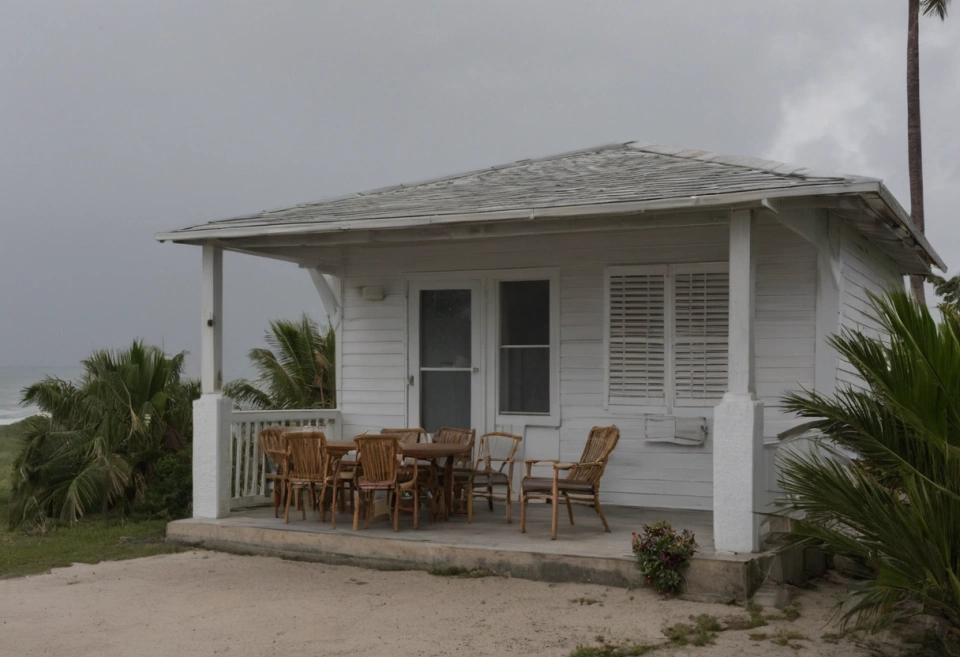
This is for anyone spending June through November in a motorhome, a travel trailer, a park model or a small coastal house, including folks who use their casita only a few weeks a year. It helps you decide three things: whether your address is in an evacuation zone, whether your particular home should roll out or hunker down, and what to secure on the lot before the wind arrives.
Find your evacuation zone before anything has a name
Evacuation zones are local. Counties and parishes draw them by surge risk, not by how far you sit from the beach, and a site six miles inland can still be in the first zone called. Look up your zone on your county emergency management page, write down the letter or color, and keep it somewhere you can read without power. Do the same for the road you actually parked on, since resort addresses and gate entrances sometimes confuse mapping apps.
Then pick two routes out, in different directions. One will be jammed or closed. Fuel stops along both routes matter more than the shortest mileage, and if you tow a car or pull a fifth wheel, think about which bridges and low underpasses you would rather avoid.
The federal Ready.gov hurricane guidance is a good baseline for household planning, and the National Hurricane Center preparedness guide explains watches, warnings and the difference between wind and water timing. Read both once in the calm part of the season. Midnight, with a cone on the screen, is not the moment.
If you own your pad rather than rent it, ask the association what its storm rules cover. Some communities have written procedures for loose items, golf carts, carports and shared docks; others leave all of it to you. Ownership structures vary quite a bit, which is worth understanding alongside deeded lots versus memberships or long leases before you assume someone else will strap down your furniture.
When an RV should leave rather than stay
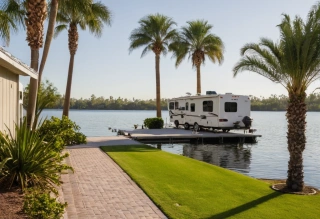
A recreational vehicle is a vehicle. That is its main advantage in a hurricane and the reason the answer is usually simple: if a hurricane warning covers your area and your rig runs, drive it somewhere inland and out of the forecast path. Days of notice exist for exactly this. Use them.
Staying put makes sense in narrower cases. The storm is weak and well south of you, your site sits high and outside any surge zone, the park has no large old trees over the pads, and your rig is a heavy diesel coach set low with jacks down. Even then you are choosing comfort over safety margin, and you should know it.
Things that push the decision toward leaving:
- Your site is in a surge or flood zone, or the access road floods in ordinary summer rain.
- You are under tall pines, oaks or palms. Root systems in sandy soil let go.
- Your rig is a light travel trailer, a pop-up, or anything with a large flat side facing open water.
- You cannot get the slides in and the awnings stowed reliably, or a slide is already stuck.
- The park closes its gates or shuts off utilities during the event, leaving you with no power, no water and no help.
Park models and manufactured small homes are a separate case. They are built to be placed, not towed on short notice, and moving one takes a licensed transporter and lead time you will not have. If yours is not tied down to current standards, treat a serious storm as a reason to leave the building, not to shelter in it. Ask the installer or the local building department what anchoring your unit has, and get the answer in writing while nothing is happening.
Before you pull out, retract awnings fully and lock the arms, bring slides in, close roof vents, stow or remove the satellite dish if it lifts, and lash the sewer hose and any storage bin. Hitch up with the checklist you normally use, because rushing is how people leave with the jacks down. If you keep most of your belongings aboard, the packing habits from storage for full-time RV living pay off here: bins that latch and shelves that hold their contents on a rough road also hold them in a hurry.
Clear the lot of anything that can fly
Wind does not care that your chair was expensive. Anything light becomes a projectile, and a projectile breaks the window next door, which is how one loose cushion turns into two claims.
Work the lot in this order:
- Bring inside anything you can lift alone: cushions, umbrellas, planters, grills, coolers, hoses, doormats, string lights, trash cans.
- Deflate or remove umbrella bases and take down shade sails, flags and hanging baskets.
- Retract fabric awnings and patio covers, then check that the arms are pinned or locked so gusts cannot unroll them.
- Strap down what stays. Ratchet straps to ground anchors or to a fixed frame beat bungee cords every time.
- Move vehicles and carts away from trees and into open ground or a garage.
- Walk the perimeter and look up. Dead limbs over your roof are a request to the property manager, not a DIY job with a handsaw.
Screened porches and carports deserve a hard look. Screens are designed to pass air, but frames and roof panels can lift if fasteners have loosened over a few humid summers. Check the connections now, in fair weather. If you are still planning that structure, the tradeoffs in covered patios and screened porches include how the roof ties to the frame, which matters more on the coast than the shade pattern.
Propane cylinders stay upright, secured, and valve-closed if you are leaving. Do not store them indoors or in a sealed compartment.
Documents and photos you will wish you had
Claims move faster when you can show what you owned and what condition it was in. This takes an hour on a quiet afternoon and is nearly impossible once the wind picks up.
Photograph or scan your registration and title, insurance declarations pages, driver's licenses, medical and prescription lists, pet vaccination records, and the lease or deed for your site. Keep encrypted copies in cloud storage plus a paper set in a waterproof pouch that leaves with you. Save your insurer's claims number in your phone contacts, not only in a wallet.
Then walk the interior with your phone camera. Open every cabinet and drawer, film slowly, and narrate nothing if you prefer silence. Get serial numbers on appliances, the generator, electronics and the rig itself. Photograph the exterior on all sides, the roof if you can reach it safely, tie-down hardware, and the pad. Repeat this once a year and after any big purchase.
Read your policy for two specifics: how wind and flood are handled separately, and whether your coverage assumes the unit is stationary or in transit. Full-timers and seasonal occupants often need different forms than a weekend user. Ask your agent plainly what happens if you evacuate and the rig is damaged on the road.
Shutters, windows and supplies for a small home or casita
Window protection is about keeping the building envelope intact. Once wind gets inside, pressure builds and roofs come off. Covering glass is structural work, not decoration.
Options, roughly in order of convenience and cost:
- Permanent accordion or roll-down shutters: fastest to deploy, need tracks kept clean and lubricated, and add weight to the wall framing.
- Removable storm panels: cheaper, heavier to handle, and useless if you cannot find the labeled bag or the bolts have rusted. Label each panel by window and dry-fit them before the season.
- Plywood cut and pre-drilled to fit: better than nothing, worse than rated products, and only sound if properly anchored into the frame rather than screwed to trim.
- Impact-rated glazing: no deployment at all, but confirm the rating covers the whole assembly, frame included.
Tape does nothing. Skip it. Also check the doors people forget: the casita's side entry, the garage door on a small lot, and any sliding glass panel, which is usually the weakest opening in the building.
For supplies, plan for several days without power, water or road access, and longer if you are on a barrier island. Water in food-grade containers, shelf-stable food you actually eat, a manual can opener, medications refilled early, batteries, headlamps, a battery radio, cash in small bills, a first aid kit, and fuel kept topped off rather than stored in quantity.
Charge everything the day before, including the power bank you forgot about. Fill fresh water tanks if you are staying in a rig, and empty black and gray tanks so nothing backs up when the dump station closes.
Generators, carbon monoxide and the hours after
Most storm deaths in small homes are avoidable, and most involve water, vehicles or exhaust. Generators belong outdoors, well away from windows, doors and vents, with the exhaust pointed away from any building, including your neighbor's. Never in a garage, a breezeway, a screened porch or under a carport roof. A screen is not ventilation. Put a battery carbon monoxide alarm inside and test it.
Refuel only after shutdown and cooling. Keep the unit dry under a purpose-built canopy that leaves the exhaust clear, and run cords rated for outdoor use rather than an indoor extension cord through a cracked window. If you are on shore power, unplug before flooding and do not reconnect until the pedestal has been checked. Backfeeding a hookup without proper isolation can kill a lineman.
After the storm, wait for local officials to say the roads are open, then approach slowly:
- Assume every downed line is live and every puddle near it is energized.
- Look at the structure before entering: shifted blocks, a racked frame, a lifted roof edge, a leaning carport.
- Smell for propane or gas. If you smell it, leave and call for help.
- Photograph damage before you move or clean anything, then make temporary repairs and keep receipts.
- Check the roof, awning arms, seams and window seals for wind-driven water, which travels sideways and shows up days later as a soft floor.
- Run the generator and appliances only once everything is dry, and discard food that got warm or wet.
Standing water and torn insulation mean mold within a couple of days in this climate. Get air moving and dehumidify fast, and be skeptical of a quick cosmetic patch over damp framing.
What to do this week
Do these five things while the sky is blue. Look up your evacuation zone and save a screenshot. Write your leave-or-stay trigger on paper and stick it inside a cabinet: which warning, which zone, which destination. Book nothing yet, but know where you would go and who would take you and your pets.
Next, dry-fit your shutters or panels and label them. Walk the lot with a ratchet strap in hand and count what needs an anchor. Take the interior video and upload the document scans. Then call your insurance agent with two questions about wind, flood and transit coverage, and write down the answers with the date.
Finally, agree with your park or association on who does what: who clears shared areas, who shuts utilities, who tells you the gates are closing. Get a name and a phone number. When the forecast tightens, you want to be executing a plan you already wrote, not inventing one.
Written and edited by the Porch & Axle editors. Posted November 28, 2026 in Setting Up.
See something wrong? Email [email protected] or read how we handle corrections.