Park model homes explained: what they are and where to put one
Park models look like small cottages but live under different rules than most homes. Here is how to tell them apart from the alternatives and what to check before you buy a lot or sign a lease.
The short version
- A park model is built as a recreational vehicle for seasonal or long-stay use at a fixed site, not for regular towing down the highway.
- Zoning, financing and insurance all hinge on how the unit is classified, so confirm that classification with local officials before you commit.
- Porches, lofts and skirting add comfort but also add weight, wind exposure and maintenance in hot, humid climates.
- Ask about lot ownership structure, utility hookups, storm plans and resale terms before signing anything.
On this page
If you are downsizing and a travel trailer feels too cramped but a full-size house feels like too much, you have probably run into the term "park model." This article is for anyone weighing a park model against a trailer, a manufactured home or a tiny house on wheels. It explains what a park model actually is, where people put them and which questions to ask before money changes hands.
What a park model actually is
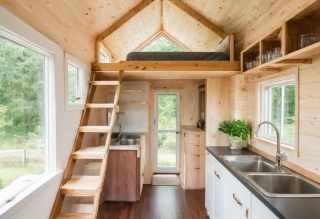
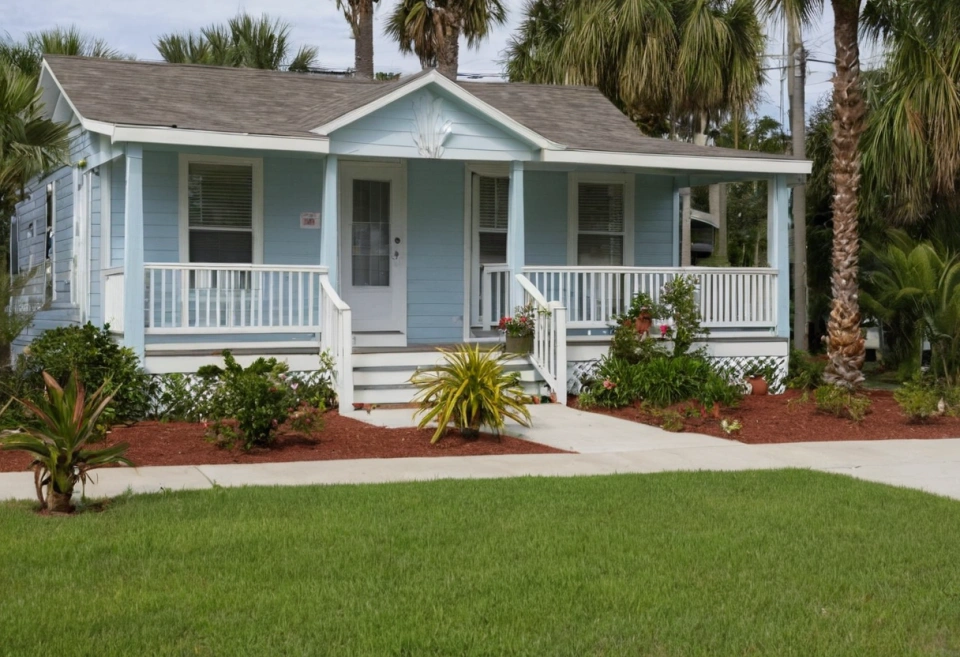
A park model is a factory-built unit designed to be towed to a site once, set up and left there for extended stays. It looks like a small cottage: residential-style walls, a real kitchen, a bathroom with a standard shower, sometimes a loft overhead. Underneath, it sits on a chassis with wheels, and it is classified as a recreational vehicle rather than a permanent dwelling. That classification matters more than the floor plan because it determines where you can place the unit, how you finance it and what your insurance covers.
The key distinction is intent. A park model is built for semi-permanent placement at a resort, an RV community or a rented lot. You do not hitch it up every weekend. Most owners move it once, maybe twice over its life. The construction reflects that: heavier framing than a typical travel trailer, residential insulation, larger windows and appliances sized for daily use rather than occasional camping.
How park models differ from the alternatives
People shopping in this size range usually compare four options. Each carries a different legal identity, and that identity drives almost every practical decision downstream.
- Travel trailer: Built for frequent towing. Lighter framing, smaller holding tanks, compact appliances. You can move it easily, but living in it full time means working around storage limits and systems designed for short trips.
- Park model RV: Heavier and roomier than a travel trailer, with residential finishes. Still legally an RV, so it goes where RVs are allowed. Not meant for regular road travel.
- Manufactured home: Built to a federal housing code, transported on a flatbed and installed on a permanent foundation. Classified as real property in many jurisdictions once affixed. Financing, taxes and zoning follow housing rules, not RV rules.
- Tiny house on wheels: Often custom-built or owner-built. May be classified as an RV, a trailer or neither, depending on the builder's certification and local interpretation. That ambiguity can complicate placement, insurance and lending.
The practical upshot: a park model gives you more living space and better finishes than a travel trailer, without the foundation work and housing-code requirements of a manufactured home. But you give up easy mobility, and you are still subject to RV placement rules in most places.
Where people place them
Most park models end up in one of three settings: an RV resort or motorcoach community, a privately rented lot, or land the owner already holds. Each comes with trade-offs worth thinking through carefully.
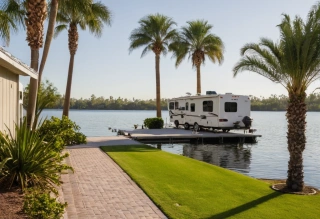
RV resorts and motorcoach communities often provide full hookups, paved pads, shared amenities and on-site management. Some sell deeded lots; others operate on memberships or long-term leases. If you are considering a community, it helps to understand how deeded lots, memberships and long leases differ, because the ownership structure affects your monthly costs, your ability to modify the site and what happens when you want to sell.
Renting a lot from a private landowner can work well, but get the terms in writing: duration, rent adjustments, who handles utilities, what happens if the land sells. A handshake deal on a rural parcel sounds charming until the owner's heirs decide to build.
Placing a park model on your own land is possible in some jurisdictions, but zoning is the gatekeeper. Many counties treat a park model as an RV and restrict how long an RV can serve as a residence on a parcel. Some allow it as an accessory dwelling or guest structure. Others prohibit it outright as a primary home. Call your county planning or zoning office before you buy the unit, not after. Ask specifically how they classify park model RVs and what permits or variances apply.
Setting up for a long stay
A park model arrives on a truck, gets positioned on the pad and connected to utilities. That sounds simple, but the details determine whether you spend the next several years comfortable or fighting moisture, wobble and power problems.
Start with the pad. It needs to be level, stable and drained. In the US South, where afternoon storms can dump inches of rain in an hour, grading and gravel matter. A pad that pools water will undermine your setup and invite mold underneath. If you are preparing a site from scratch, the process of leveling, stabilizing and connecting power and water for a long-stay pad follows the same principles whether you are placing a park model or a large motorhome.
Skirting closes the gap between the bottom of the unit and the ground. It keeps critters out, reduces wind uplift and improves insulation. In humid climates, make sure the skirting allows airflow underneath. Sealing everything tight traps moisture against the underside, and that leads to rot you will not see until it is expensive.
Power connections deserve attention. Park models draw more current than a typical travel trailer because they run residential appliances, air conditioning and sometimes electric heat. Confirm that the pedestal supplies the right amperage and that your cord and surge protection match. Undersized wiring or a loose connection generates heat, and heat in a junction box is how fires start.
Add-ons: porches, lofts and outdoor rooms
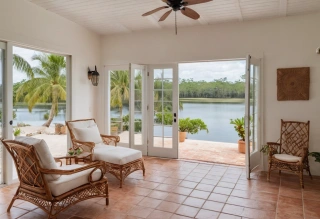
One reason people choose park models over trailers is the ability to add livable space outside the main footprint. A covered front porch with room for two chairs turns a parking pad into a place you actually want to sit. A loft adds sleeping or storage space without expanding the footprint. A screened side porch gives you bug-free evenings in a climate where mosquitoes are a genuine lifestyle factor.
These additions are worthwhile, but they change the engineering picture. A porch roof catches wind. In coastal and Gulf areas, any structure attached to or sheltering the unit needs to handle storm loads. Florida-room additions (enclosed porches with windows and screens) are popular in southern resorts, but check whether the community and local codes allow them and whether your insurance covers attached structures.
Lofts add usable square footage but concentrate heat near the ceiling. In a humid climate, that upper space needs ventilation or its own cooling, or it becomes a sauna by mid-afternoon. Insulate the loft floor if the space below is air-conditioned; otherwise you are cooling the loft through the ceiling and wasting energy.
If you are planning outdoor living space alongside the unit, think about orientation and shade before you pour concrete or set posts. A porch facing west in the Deep South will bake all afternoon unless you plan for it with roof overhang, screens or plantings.
Questions to ask before you commit
The paperwork side of a park model purchase is where surprises live. Run through these questions with the seller, the community manager and your local officials before you sign.
- Zoning and classification: How does the county classify this unit? Can it serve as a primary residence on this lot, or only as a seasonal or accessory structure? Are there time limits on occupancy?
- Financing: Because a park model is titled as an RV, most mortgage lenders will not touch it. Financing typically runs through RV lenders or personal loans, with shorter terms and higher rates than a home mortgage. Ask your lender early what they will accept.
- Insurance: Standard homeowner policies usually do not cover RV-classified structures. You will likely need an RV policy or a specialty park model policy. Confirm what is covered: the unit, attached porches, contents, liability and storm damage. In hurricane-prone areas, ask specifically about wind and flood exclusions.
- Lot fees and rules: If you are in a community, get a full schedule of monthly or annual fees, what they include and how they can increase. Ask about rules on modifications, pets, rentals and age restrictions.
- Resale: Park models depreciate differently than real estate. Ask whether the lot transfers with the unit or separately. In lease communities, the buyer may need approval from management. Understand the resale process before you buy, not when you are ready to leave.
- Storm preparedness: Know your evacuation zone and the community's storm plan. A park model is not designed to ride out a major hurricane in place. Have a plan for securing the unit, removing loose items and evacuating when orders come.
Your next steps
Start by visiting two or three communities or lots where park models are already placed. Walk through occupied units if owners will let you. Look at the underside, the skirting, the porch connections and the condition of the roof seams. Ask residents what they wish they had known before moving in.
Then call your county zoning office with the specific make and model you are considering. Get their answer in writing if you can. A phone conversation is helpful, but a letter or email you can show a lender or insurer is better.
Finally, talk to an insurance agent who has written park model policies before. Bring the unit's specifications, the lot address and any community requirements. Getting a real quote early will tell you more about the true cost of ownership than any brochure.
Written and edited by the Porch & Axle editors. Posted November 28, 2026 in Living Small.
See something wrong? Email [email protected] or read how we handle corrections.